Biopharma dealmaking has continued to grow, but since passage of the Inflation Reduction Act, there are signs of a shift away from the earlier-stage, higher risk R&D that drives breakthrough innovation, and toward more clinically validated medicines. This trend underscores the importance of strengthening incentives for the high-risk research that sustains U.S. biopharmaceutical leadership.
Since the enactment of the Inflation Reduction Act (IRA) in 2022, the law’s impact on long-term life-science innovation has remained heavily debated among stakeholders. Specifically, the IRA’s Medicare drug price negotiation provision was designed to cut prices for high-spending drugs later in their life cycle, with the expectation that doing so would strike a balance between generating savings and protecting incentives for innovation.
However, investors report that IRA-related pricing constraints have meaningfully impacted valuations for future assets and pushed the dealmaking landscape toward tighter capital discipline and more milestone-based financing for early assets. An unintended consequence of the IRA’s Medicare negotiation provisions is that, by lowering expected returns, they make scientific uncertainty a bigger factor in investment decisions, driving greater selectivity and a focus on more advanced assets with greater confidence of eventual approval. By changing expected commercial returns, IRA pricing provisions introduced a strong upstream influence on the types of research programs that attract funding and how much development risk investors and manufacturers are willing to take, years before a treatment reaches patients. This may be a particular concern for assets that are disproportionately impacted by the IRA’s provisions, such as small-molecule therapies.
To examine how dealmaking has evolved under increasing US policy volatility and test the self-reported strategies in the literature, Blue Matter analyzed early-stage biopharma transactions between 2016 and 2025 and compared activity before and after the IRA’s enactment. The analysis focused on novel potential medicines in the preclinical through Phase 2 research and development (R&D) stages at the time of the deal, funding, or clinical trial initiation. The analysis covers any investments into potential medicines that are being developed for U.S. patients.
Key Takeaways
Blue Matter identified three key takeaways:
- Shift away from early-stage risk: Since the enactment of the IRA, biopharma companies are moving away from early-stage risk: from backing a broad portfolio of early programs to concentrating capital in a small number of clinically validated assets.
- While average deal value increased by 80% relative to before the IRA, a higher share of deals are now invested in later stage assets (49% post IRA vs 40% pre IRA).
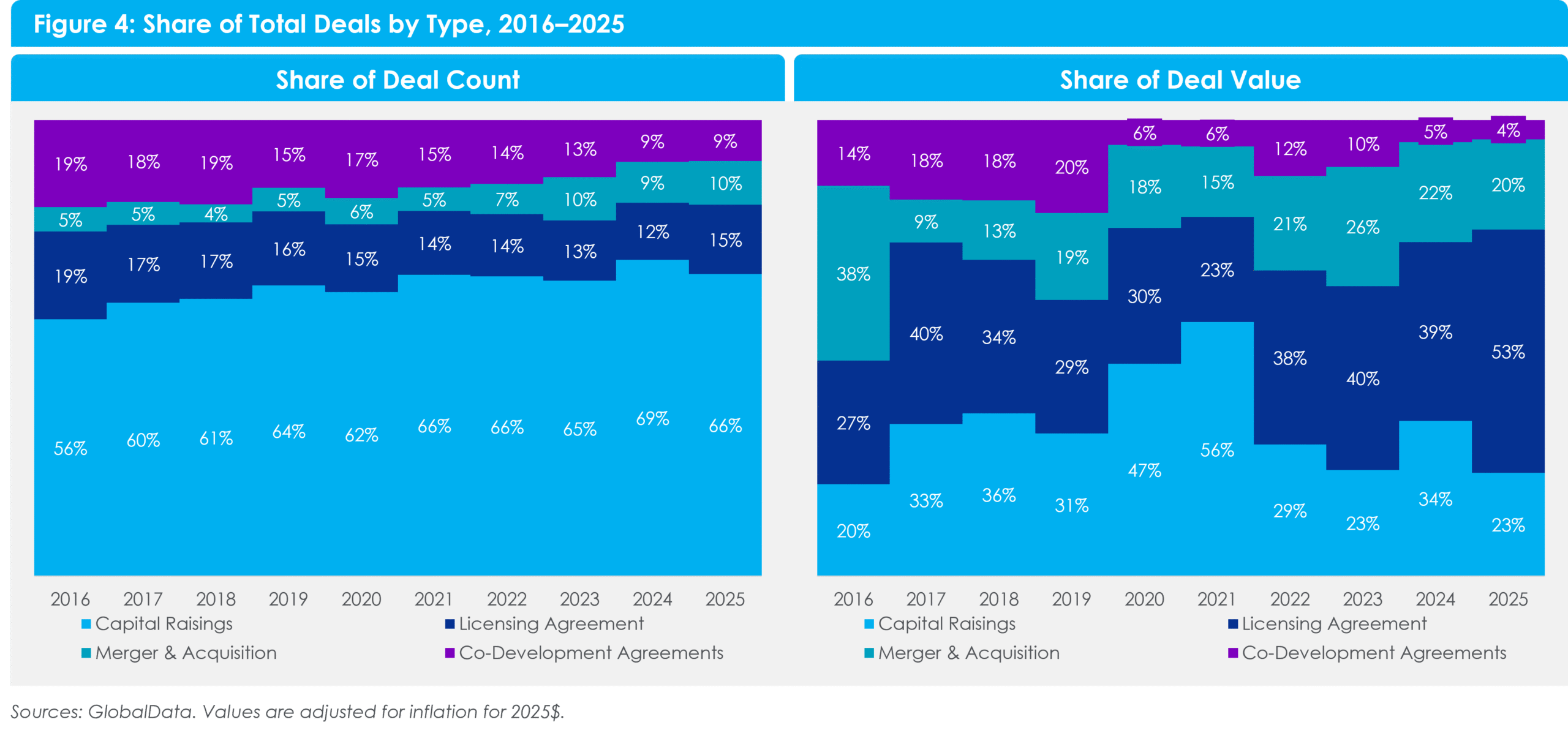
- Licensing deals, which let buyers defer much of their payment until an asset hits clinical milestones, have remained roughly 15% of deals over time, but have ballooned from 23% of value in 2021 to 53% of total value in 2025.
- China’s rise is a symptom, not the cause: China’s growing role as a source of early stage assets is a symptom of that de-risking, not the cause, since the same trends hold whether or not China-origin deals are included.
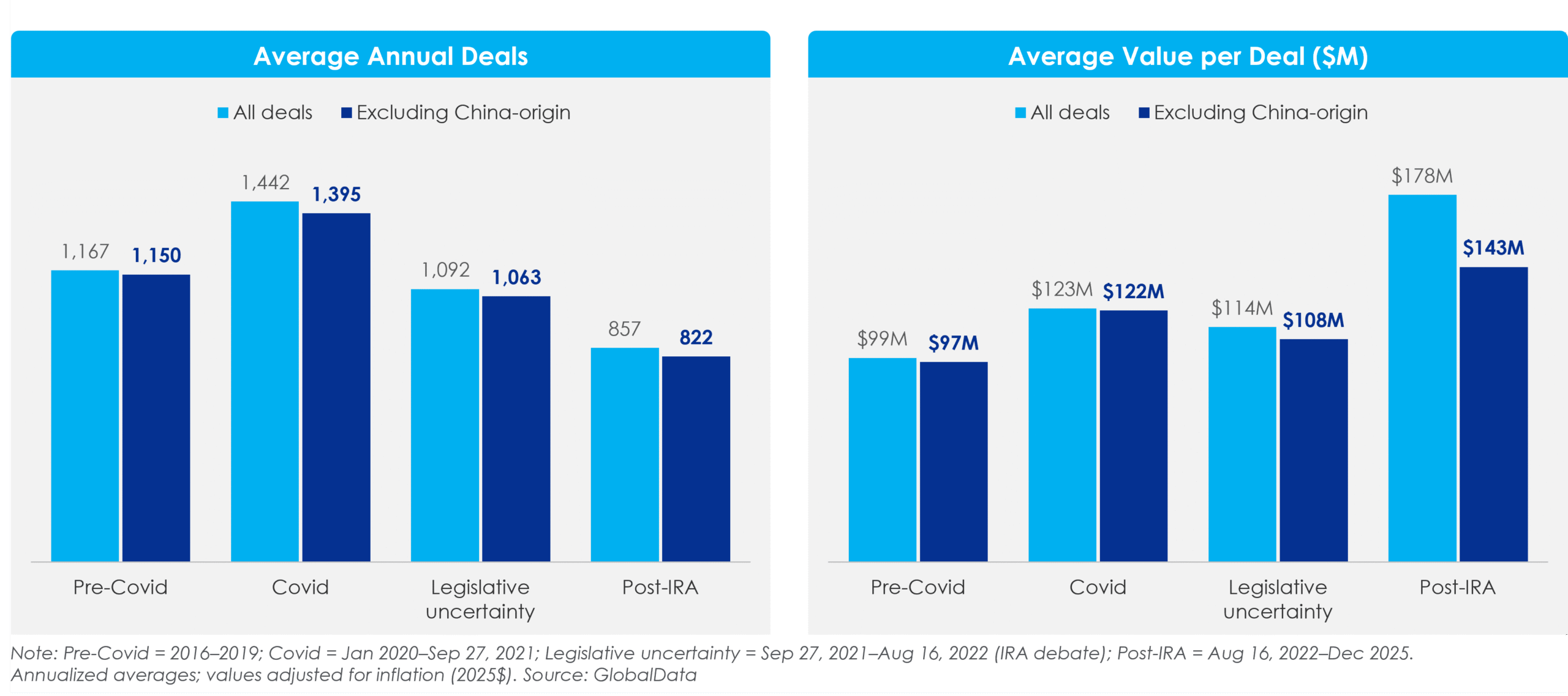
- Annual biopharma deal counts have dropped by almost 30% from pre-COVID levels, whether or not China-origin assets are included.
- Restoring US incentives: Maintaining US leadership therefore depends less on restricting US industry investment in China than on restoring the policies that made the US the preferred place to run trials, secure first approvals and launch new medicines.
Overall Dealmaking Has Shifted Toward De-Risked Behavior
Fewer Deals, Larger Transactions
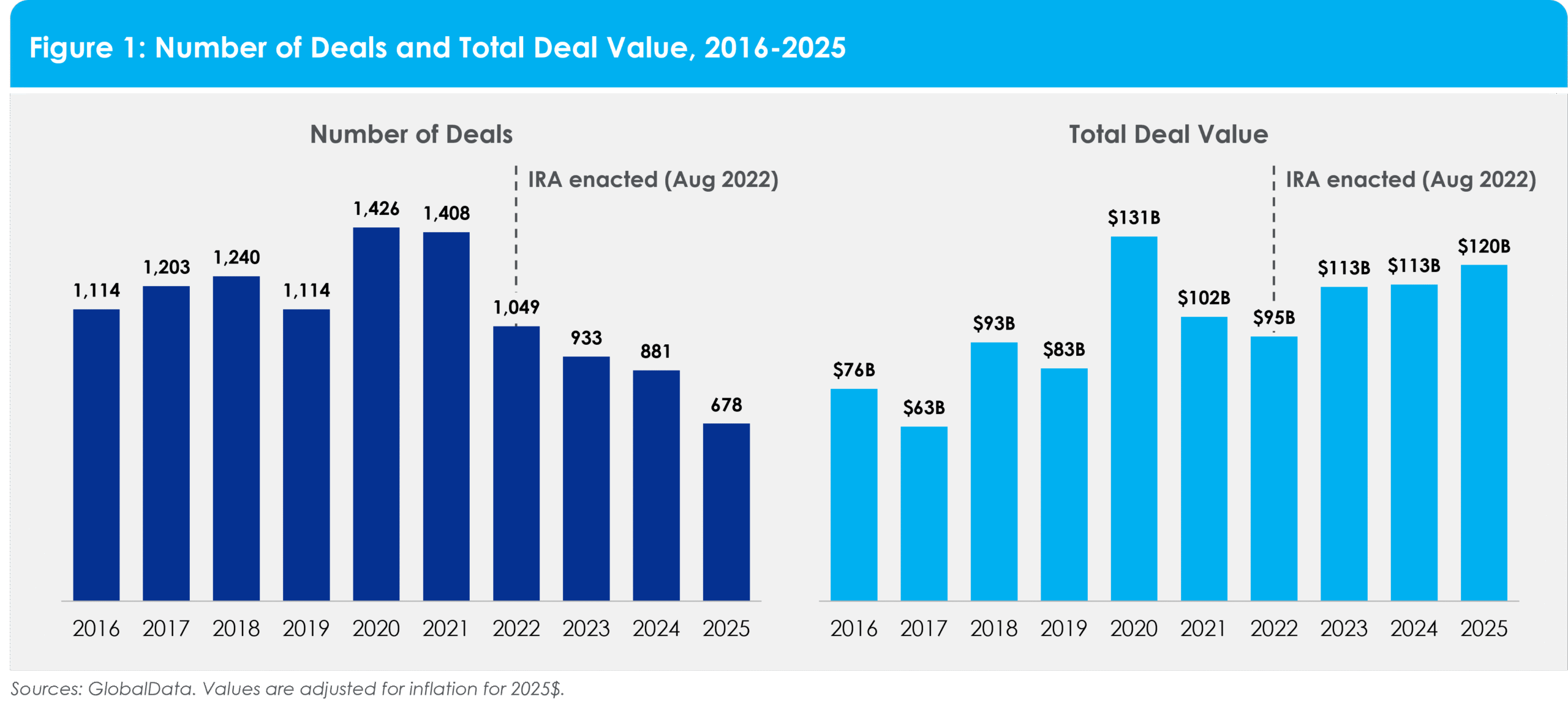
First, Blue Matter assessed global investment into assets with US commercial potential across two main parameters: number of deals completed (total deal count) and the cumulative dollar value of those deals (total deal value). As Figure 1 shows, the number of deals has declined steadily since IRA enactment, falling from 1,049 in 2022 to 678 in 2025. At the same time, total deal value has increased, from $95B in 2022 to $120B in 2025, which has been cited as evidence that the biotech sector remains healthy. However, because that larger pool of capital is spread across far fewer deals, the average value per deal has nearly doubled over the same period. This suggests a redistribution of funding away from a broad base of early-stage ideas toward a smaller number of larger bets on more clinically validated assets that are further along in development and carry lower risk.
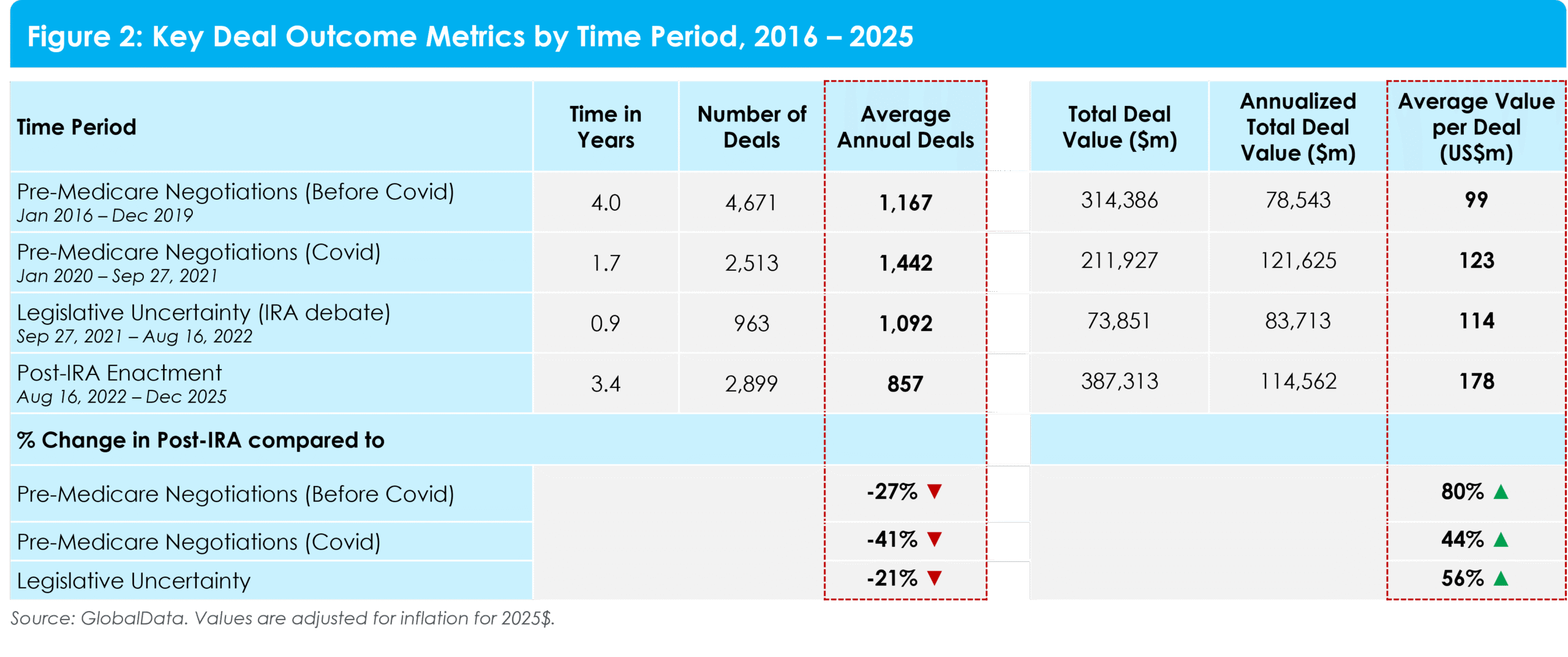
Blue Matter then segmented the 2016–2025 period into four key timeframes: pre-Medicare negotiations before COVID (2016–2019), pre-Medicare negotiations during COVID (January 2020–September 2021), legislative uncertainty during the IRA debate (September 2021–August 2022) and post-IRA enactment (August 2022–December 2025), separating out the COVID years to account for potential outliers in pandemic-era deal activity. Because these timeframes vary in length, from under one year to four years, deal counts and values were time-normalized into annualized rates to allow a like-for-like comparison (see Figure 2). On this basis, average annual deal count after IRA enactment was 21–41% lower than in the periods before IRA enactment, while average value per deal was 44–80% higher. The pattern holds against every earlier period, including the pre-COVID baseline, so it is not an artifact of the pandemic.
This pattern points to a market concentrating value in fewer transactions. This topline trend is consistent with a broader shift toward “de-risked” investment behavior in the post-IRA world, characterized by three patterns:
- Concentration in clinically-advanced programs: Investors are competing for fewer, more clinically validated programs instead of spreading capital across more early-stage, higher-risk programs
- Rising valuations, shrinking early-stage funding: Competition for later-stage assets is driving valuations up even as deal counts fall, leaving less capital for early-stage science
- Risk shifted to developers: Investors increasingly structure deals around clinical milestones and release capital only as programs succeed, which leaves developers to absorb more of the cost of failure.
Shift to Later-Stage Assets
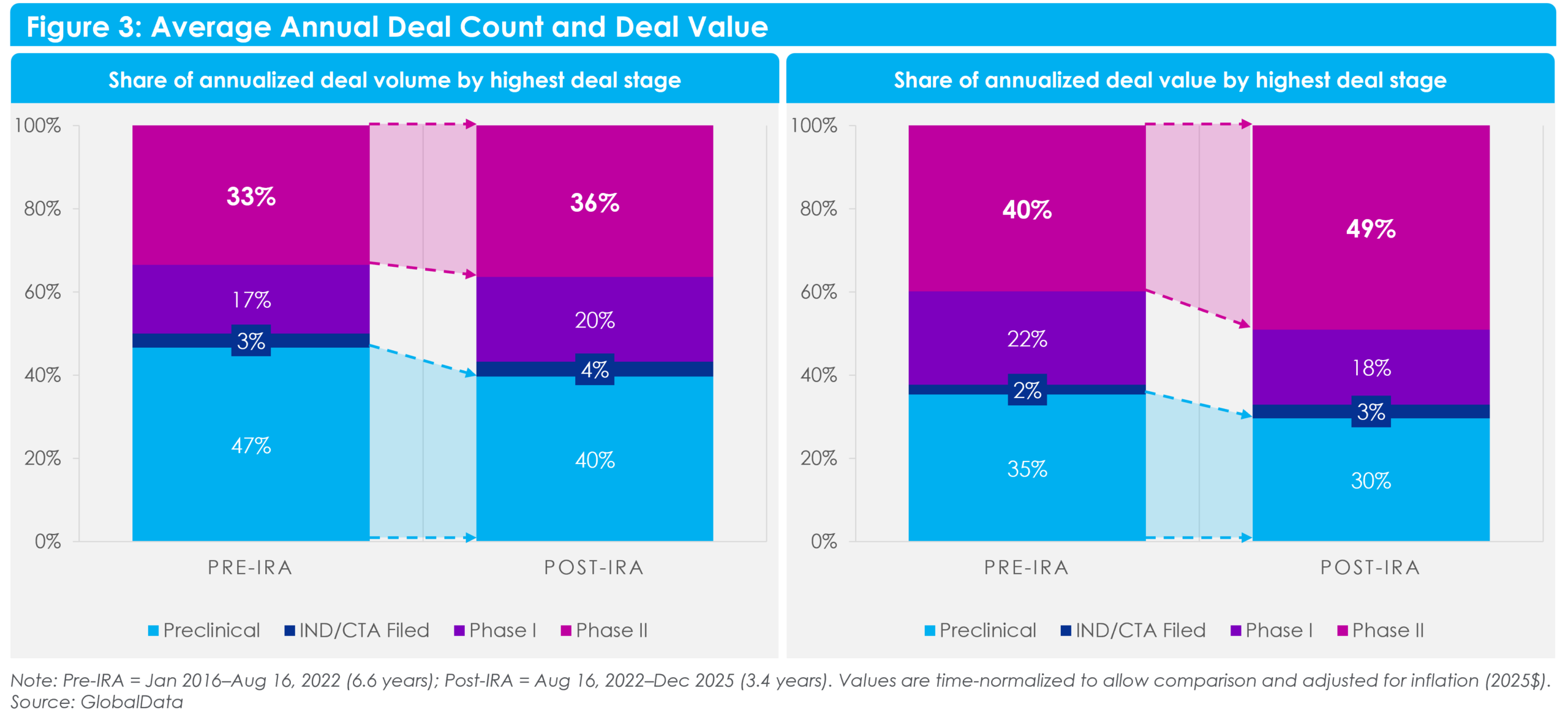
Next, we decompose the change in deal activity before and after the IRA by stage of development. While overall deal count and value increased post-IRA, decomposing the deal activity by stage reveals a shift: preclinical assets declined as a share of both deal count and value, while later-stage assets gained shares in both.
By focusing on preclinical through Phase 2 assets, the analysis tries to capture the stage of development most sensitive to the IRA’s long-term incentive effects and most important for the future pipeline. While on the whole deal values have increased in the post-IRA period, decomposing how that value has shifted amongst assets suggests that investors are placing those bets differently than pre-IRA. After IRA enactment, preclinical assets fell from 47% to 40% of annualized deal count and from 35% to 30% of deal value (see Figure 3). Phase 2 assets moved the other way, rising from 33% to 36% of deals and from 40% to 49% of value, so the most clinically advanced assets in the analysis now account for nearly half of annualized deal value reflected in this analysis. Phase 1 assets gained a modest share of deals but lost share of value (22% to 18%), suggesting investors remain willing to engage at that stage but hold back larger commitments until programs generate mid-stage clinical data.
Changes to expected returns under the IRA and other ongoing policy and market volatility likely make uncertain, early-stage research less attractive to investors. Approaching patent expiries may amplify this effect by encouraging manufacturers to prioritize more advanced assets that could replace lost revenues sooner. The concern is that stable overall deal value may conceal weakening support for the early research that supplies future drug pipelines.
Licensing Is Capturing a Growing Share of Deal Value
Deal structures show the same move toward lower risk. Capital raisings, the venture and equity financing that carries companies through early research, remained about two-thirds of all deals from 2021 to 2025, yet their share of overall deal value fell from a peak of 56% in 2021 to 23% by 2025 (see Figure 4). Licensing, by contrast, captured a growing share of deal value, rising from 23% to 53% over the same period, while its share of deal count held steady at roughly 14–15%, meaning more value is being concentrated in licensing agreements without a corresponding increase in deal activity. Investors now may prefer to license individual assets once there is sufficient evidence they work, often with milestone-based terms, instead of backing promising early-stage programs before clinical proof of concept. This matters because today’s licensing deals depend on assets funded years earlier, the product of a different risk-tolerance environment. This poses questions for the health of future dealmaking, especially if risk tolerance for the U.S. market has shifted.
Small Molecules Are Losing Ground to Biologics
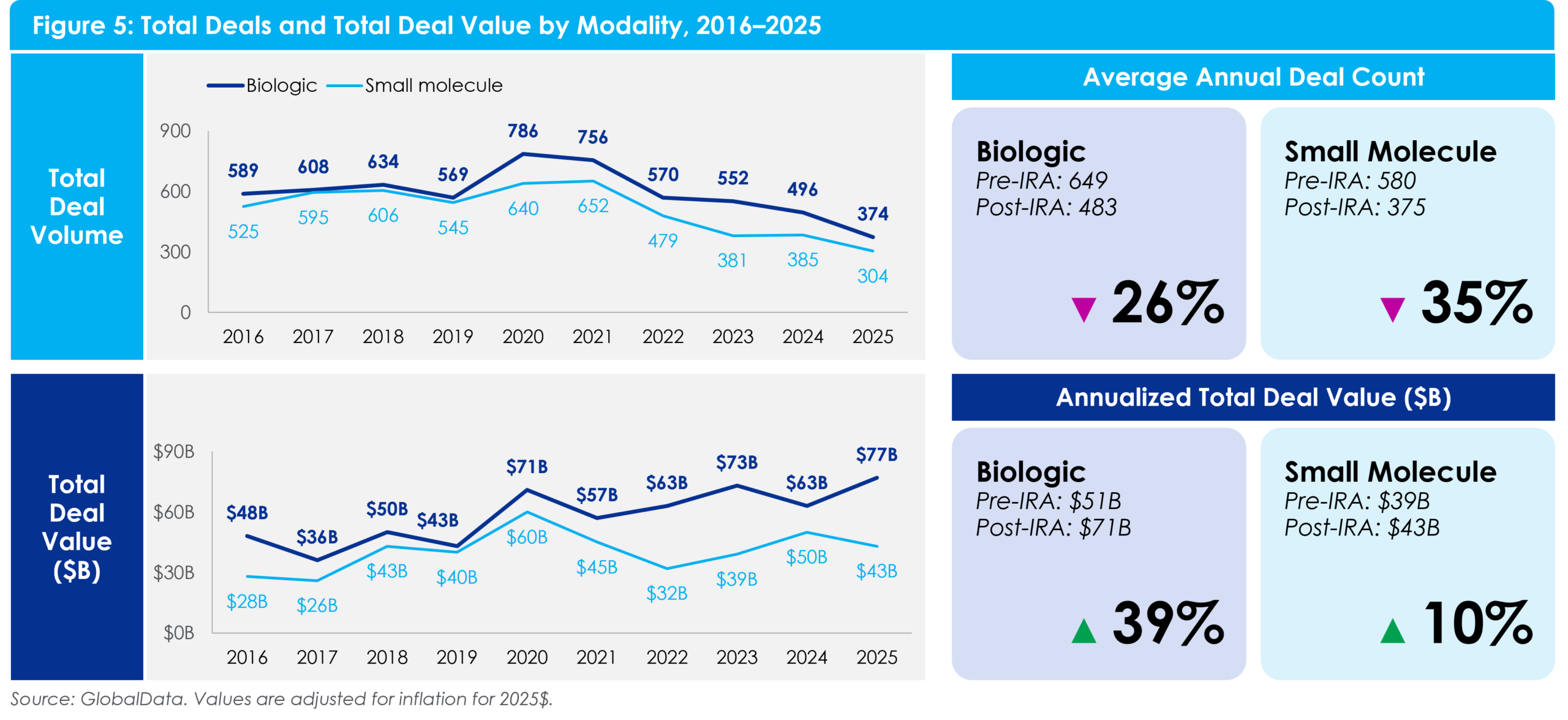
Furthermore, given the IRA’s longer negotiation timeline for biologics, deal value grew more strongly for biologics than for small molecules following IRA enactment. Comparing the pre-IRA and post-IRA periods, annualized biologic deal value increased by approximately 39%, compared with 10% growth for small molecules (see Figure 5). Deal volume also fell more steeply for small molecules, with average annual deal count down 35% from pre-IRA to post-IRA, compared with 26% for biologics. Investors appear to be favoring the modality with the longer period of protected returns under the IRA, even though biologics are not inherently lower-risk to develop.
US-Origin Investment Remains Substantial but Shows Signs of IRA Impact
Blue Matter further reviewed deal patterns to understand implications specifically for US-based innovation. Annualized deal value for US-origin assets remained broadly flat following IRA enactment, but deal activity contracted. Average annual deal count fell by approximately 34%, from 1,035 to 680, indicating that sustained aggregate value increasingly rested on a smaller number of deals. US-origin assets held their annualized deal value after IRA enactment at about $69B, a sign of the underlying strength of US science, but the IRA may be limiting the US’s ability to capture a greater share of global growth.
China’s Rise Is a Symptom of De-Risking, Not the Cause
Alongside these shifts, China’s growing role as a source of early science has become a focus of concern. The data suggest China has not displaced the US, but its rise may reflect the same pressures pushing investors toward de-risked assets. China has made significant investments to build the capacity to innovate faster and cheaper in earlier drug development stages than other nations, while policy, pricing and capital pressures in the US and Europe may have increased demand for Chinese-sourced innovation.
The Same Trends Hold Without China
China’s growing share must therefore be assessed in the context of the wider market. Annualized deal volume for China-origin assets increased from 26 to 37 deals per year pre- and post-IRA, while average annualized deal value rose from $4.3B to $24.9B. The rising average value of early-stage China-origin assets appears to reflect greater competition for a smaller number of promising programs, rather than an increase in the overall breadth of deal activity. Even when China-origin transactions are excluded, the pattern of fewer deals and higher average deal values persists (see Figure 6).
This does not rule out competition for investment between US and Chinese assets. However, that competition is less a zero-sum contest than a contest for a greater share of global growth. It also weakens the case for attributing declining US deal activity primarily to China’s rise.
Headline Licensing Values Overstate Capital Deployed
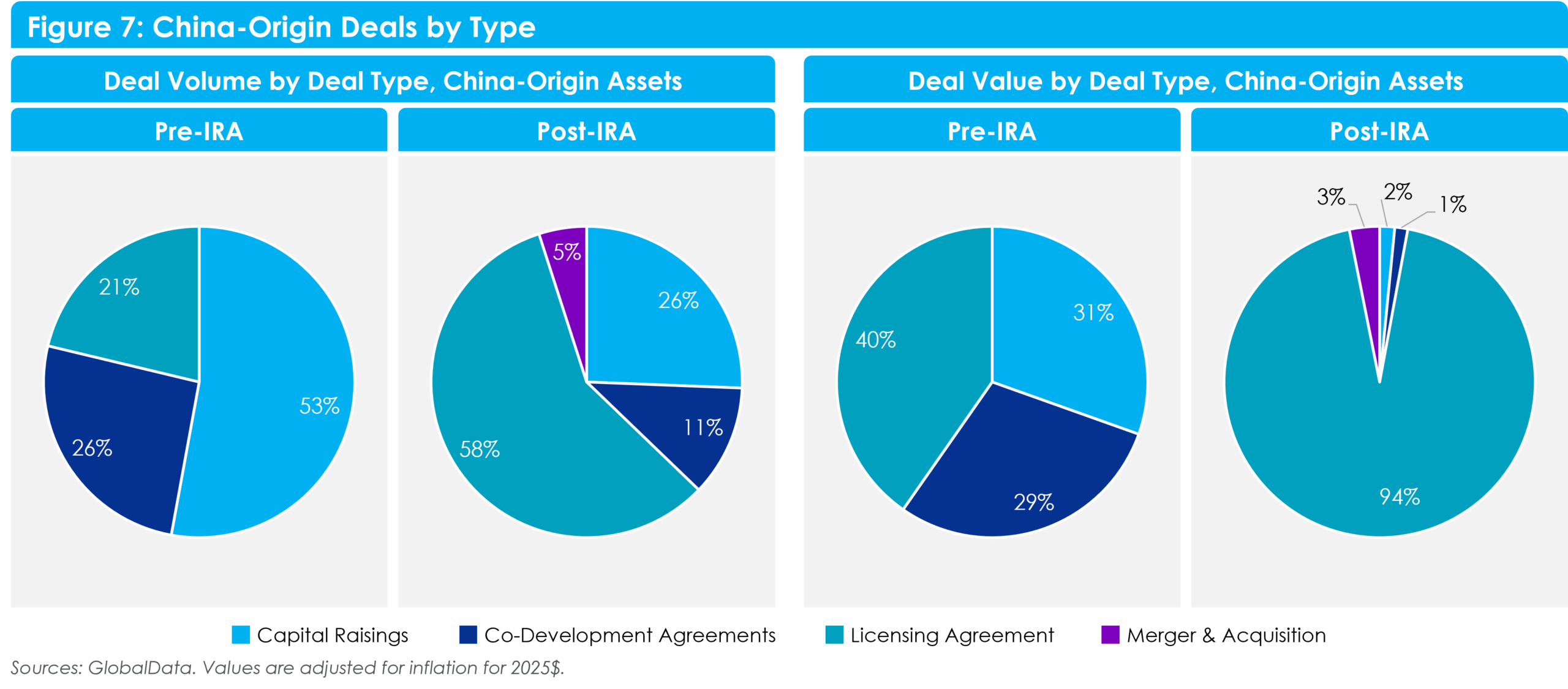
The structure of these transactions matters as well. Licensing agreements accounted for 58% of post-IRA China-origin deals and 94% of their value (see Figure 7), with headline figures incorporating substantial milestone-dependent payments. The distinction between announced value and upfront payment is important here. Five licensing agreements alone represented approximately 44% of China-origin deal value in 2025. Of their combined $17.2B potential value, less than 9% was committed upfront. These agreements demonstrate considerable commercial interest, but their announced values should not be equated with capital already deployed. The headline China licensing deals are themselves an expression of de-risking, as buyers acquire assets with early clinical data and defer most payments until milestones are met.
Sustaining US Leadership Requires Restoring Stronger Incentives for Innovation
Blue Matter’s analysis points to a broad shift toward de-risking that may not be well understood by stakeholders who focus only on headline deal value. US-origin deal value remains stable and substantial, but fewer transactions and shifts away from preclinical and Phase 1 assets raise concerns about support for early research. The IRA is the most significant policy change coinciding with these shifts, and the decline in early-stage deal value and the slower growth in small-molecule deal value are consistent with its adverse incentive effects. Pricing pressure has also continued to build since the IRA’s enactment, including through most-favored-nation (MFN) pricing initiatives that tie US prices to those paid in other high-income countries. By further lowering expected returns in the US market, these policies may intensify the move away from early-stage risk.
China’s growing role should be understood in this context. Because commercial viability in the US market remains the primary driver of returns for innovative medicines, demand for China-origin assets may reflect investors’ focus on de-risking more than China’s domestic reforms alone. Sustained industrial policy and government investment have made China a growing source of innovation, but its appeal to US and European buyers may rest largely on early clinical data generated quickly and at lower cost. Licensing these assets allows buyers to acquire evidence of efficacy while deferring most payments until milestones are met, which is exactly the behavior a de-risking market rewards.
Policymakers in the US are nonetheless responding to China’s rise with increasingly protectionist tools, including outbound investment restrictions under the Comprehensive Outbound Investment National Security (COINS) Act. Protecting national security is a legitimate objective, but the Department of Treasury itself acknowledges that restrictions could also harm US businesses or create public health risks. While Congress did not include biotechnology as a covered sector under COINS, an October 2026 proposed rule seeks to add a broad prohibition on biotechnology transactions. Such measures may create unintended consequences for US drug supply, costs and patient access to innovation, while doing little to address the uncertainty about future returns that is driving capital patterns. The US retains considerable strengths, including deep capital markets, established pharmaceutical companies and a global gold-standard regulator. Policy focus should instead shift to restoring the stable, predictable incentives that keep the US the most desirable place to develop and commercialize innovative therapies, and the first choice for clinical trials, first approvals and commercial launch.
About the Analysis
Blue Matter analyzed 11,046 completed GlobalData transactions between 2016 and 2025 involving early-stage biopharma assets, defined as those whose highest development stage at the time of transaction was preclinical, Phase 1 or Phase 2. The analysis compared periods before and after IRA enactment on August 16, 2022. Transactions were drawn from four GlobalData deal categories: mergers and acquisitions, co-development partnerships, licensing agreements and capital raisings (equity offerings, debt offerings, private equity and venture financing). The analysis was limited to novel potential medicines, excluding generics and biosimilars, and to transactions in which the acquirer or investor has a market presence in the U.S., either due to sales of medicines in the U.S., being a U.S.-domiciled company, or both. Assets were classified by modality (small molecules vs biologics) and by country of origin. Counts and values are annualized to account for unequal comparison periods; monetary values are inflation-adjusted to 2025 dollars. Geographic comparisons refer to asset origin rather than investor location. Reported deal values can include contingent milestone payments and should not be interpreted as capital already deployed. The analysis describes transaction patterns, rather than all US biotechnology investment, and does not establish causality.
Key Definitions
- Mergers and acquisitions (M&A): One company merges with or acquires another company, or buys specific assets from it (asset transactions), taking ownership of the target’s development programs.
- Co-development agreements: Partnerships in which two companies share the cost, risk and potential rewards of developing an asset.
- Licensing agreements: One company acquires the rights to develop and/or commercialize another company’s asset, typically in exchange for an upfront payment, future milestone payments and royalties on sales.
- Capital raisings: Funding a company raises to finance its research and operations, including equity offerings (e.g., initial public offerings, private investments in public equity and secondary offerings), debt offerings (borrowing money from investors that must be repaid), private equity (investment from private funds) and venture financing (investment from venture capital firms in young, high-growth companies in exchange for equity).
- Upfront vs milestone payments: An upfront payment is made when a deal is signed, regardless of how the asset performs. Milestone payments are contingent and are paid only if the asset reaches specified clinical, regulatory or commercial goals, so they may never be paid. Headline deal values typically include both.
- Geographic Origin: Assets were classified by geographic origin (e.g., China-Origin; US-Origin) according to the headquarters of the company with commercial rights to develop the asset prior to the deal. Depending on the deal type, this would be either the company being acquired (in the case of mergers / acquisitions), the company out-licensing the asset in question (in the case of licensing deals), or the company being invested in (in the case of capital raisings or co-development agreements).