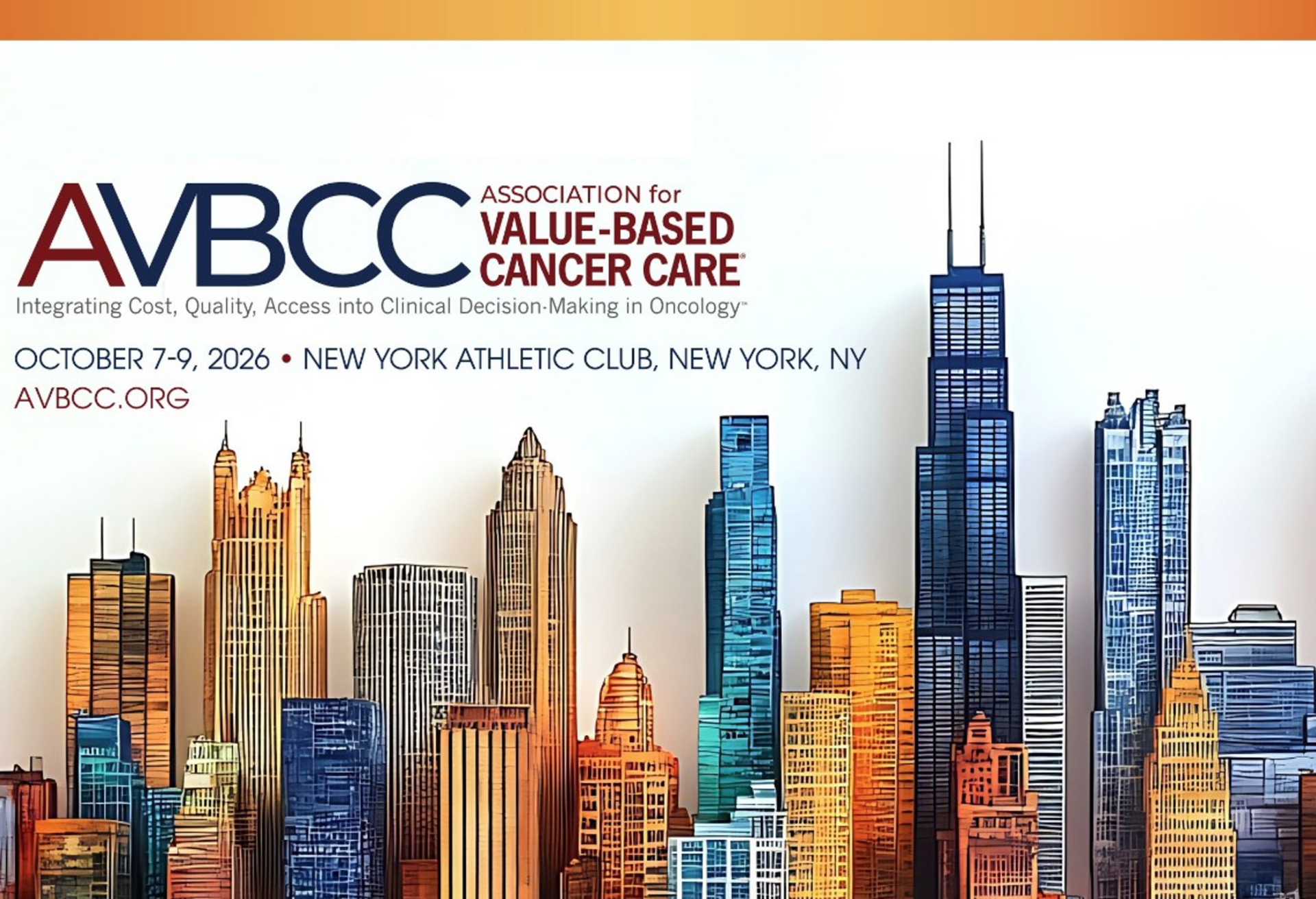
Blue Matter recently attended the 2026 summit of the AVBCC (Association for Value-Based Cancer Care), again held in New York City. AVBCC is an important forum for leaders across community oncology, payers, biopharma, patient advocacy, and government to discuss the policy, reimbursement, and care delivery shifts reshaping cancer care in the US.
Many key themes discussed at last year’s AVBCC remained top of mind in 2026, but the sense of risk and urgency was heightened, and various environmental pressures have matured into policies and pilot programs that are beginning to restructure the oncology ecosystem. Notably, on the panel titled, Washington’s Headlines: Separating Risks from Real Risks, panelists were asked to sort issues into “headline risk” vs. “real risk” and the group largely struggled to name things that were just headline risks.
So much is transforming the oncology ecosystem, and to cover the breadth of change, this year’s conference included two fireside chats with CMS leadership: Abe Sutton, Director of the CMS Innovation Center, and John Brooks, Director of the Center for Medicare, alongside panels that discussed a variety of timely oncology policy and market access topics from AI-powered prior authorization to the collapse of standalone Part D plans and accelerating offshoring of US clinical research to China. Several notable themes for biopharma leaders emerged throughout the week:
Patient voices should remain at the center of any oncology access discussions. Blue Matter’s Mary Roberts participated on the State of the Patient panel where panelists discussed how, amid all the policy and access changes, it remains critical to put patients first and that manufacturers should continue to evaluate how their patient support strategy might need to evolve in response. This idea remained central throughout the week as conversations emerged around access and affordability.
Most Favored Nation (MFN) is shaping drug pricing and launch strategy. MFN has now entered the drug pricing and reimbursement environment via the finalized Global Benchmark for Efficient Drug Pricing (GLOBE) model and manufacturer deals with the administration. Although only a very small handful of manufacturers are currently eligible under the final model, panelists repeatedly emphasized its broader significance. The model establishes a precedent for more expansive future action by CMMI and for the incorporation of international reference pricing concepts into other drug pricing policies, including the Medicare Drug Price Negotiation Program. States are also considering how to translate MFN pricing into state-level policy, with Prescription Drug Affordability Boards and Medicaid Preferred Drug List requirements emerging as likely vehicles for adoption.
Practices are preparing for Maximum Fair Price (MFP) effectuation for Part B oncology products. Although physician-administered oncology therapies have not yet faced negotiation; MFP effectuation has begun to impact oral oncolytics. CMS’ John Brooks characterized 2027 as “the first post-IRA year where the [Part D] market has basically adapted to the new normal.” Meanwhile in Part B, oncologists are bracing for the impact of effectuation over the next several years.
Part D is becoming increasingly economically fragile. Panels covered the erosion of the standalone Part D plan market, including on the How Oncology Became the “Unprotected” Class and Will it Remain? panel moderated by Blue Matter’s Milena Sullivan. Panelists highlighted that with skyrocketing Part D costs, plans are struggling to absorb risk, particularly for high-cost oncology drugs. While the IRA’s redesign was intended to stabilize the program through manufacturer discounts and an out-of-pocket cap, panelists questioned whether the current structure is sustainable through the end of the decade, especially as the base premium cap expires.
Community oncology practices are increasingly dependent on drug margin to offset inadequate reimbursement for clinical services, leaving many vulnerable to changes in drug payment policy. The viability of community oncology was a recurring concern throughout the week. Multiple panels noted that reimbursement for oncology services often does not fully cover practice operating costs, making drug margin a key source of practice-supporting revenue. As Medicare reimbursement declines for oncology products subject to MFPs, providers may struggle to remain financially viable; panelists suggested that even a small reduction in drug margin could destabilize some practices.
Community practices are eager to implement value-based care (VBC) models. Various VBC models have been tested in the oncology space, including Oncology Care Model (OCM) and Enhancing Oncology Model (EOM) most recently. Throughout AVBCC, practices critiqued EOM for its narrow scope of included cancers and limited cost-saving results but were adamant about engaging CMMI and commercial payers on alternative models. Employers are also emerging as a potential ally for VBC models amid growing drug expenditures and other health-related spending. CMMI Director Sutton indicated that the Center is willing to work with practices faced with significant future revenue declines, but only with models that include downside risk.
AI solutions to enhance practice efficiency come with drawbacks for the broader oncology environment. AI was prominent across panels, for example, panelists on the Supply Channel: Contracting in the Brave New World of Transparency panel highlighted that for one community practice, AI is already digitizing their hundreds of contracts and flagging errors in real-time. However, panelists cautioned that AI could accelerate consolidation: only practices with sufficient data and scale can participate in AI-enabled value-based arrangements; again, emphasizing the various threats that community practices will be facing over the next few years. CMMI’s Sutton also highlighted the Wasteful and Inappropriate Service Reduction (WISER) pilot which is an AI-powered prior authorization model aimed at lowering costs and expanding patient access.
China continues to challenge American leadership in innovation. Panelists on the US vs. China, Preserving Our National Treasure: Clinical Research panel, including Blue Matter’s Tara Austraat-Churik, discussed potential reasons behind the increasing shift in clinical trials from the US to China. Reasoning included regulatory and bureaucratic burden and robust, deliberate Chinese investment in scaling research capacity. One panelist shared that, at ASCO 2026, a drug wholly created, studied, and presented by Chinese investigators appeared on the plenary stage for the first time, marking yet another milestone of Chinese industrial progress. The panel agreed that China has outpaced the US in building more attractive clinical trial infrastructure, and that the US must address its own regulatory and bureaucratic inefficiencies to remain competitive rather than take its leadership position for granted.
Looking Forward
AVBCC made clear that the US oncology market access model is becoming unsustainable, and that a new model is beginning to take shape. Several signals are worth watching as the ecosystem evolves over the next several years:
| Area | Key Questions and Signals to Watch |
|---|---|
| GLOBE / MFN |
|
| IRA / MFP |
|
| Part D |
|
| Community Oncology |
|
| Value-Based Care |
|
| AI / Digital |
|
| Global Competition |
|
For biopharma leaders, this requires proactive strategic positioning. If you have questions about how the evolving landscape is impacting your commercialization, market access, or policy strategy, please Contact Us via our website. We will be glad to schedule an initial conversation so we can get to know you and your business needs better.