ISPOR 2026 took place in Philadelphia from May 17-20, attracting more than 4,500 stakeholders across health economics and outcomes research (HEOR) and evidence generation, market access, and health policy. These professionals came together to discuss the trends shaping healthcare decision-making across global markets. This year’s discussions focused heavily on artificial intelligence (AI), real-world evidence (RWE), patient-centered value assessment, and the continued pressures surrounding pricing and access.
Even with the diversity of topics, one overarching takeaway emerged consistently throughout the conference: evidence generation, technology, policy, and market access are all becoming increasingly interconnected. HEOR is no longer viewed solely as a function that supports reimbursement and value demonstration; many organizations now see it as a strategic capability that can inform development, commercialization, and lifecycle decision-making.
No single blog post can capture a full summary of everything that took place at ISPOR 2026, but we can highlight a few things that stood out to us. Below, let’s explore several key themes that, in our view, threaded across multiple sessions and discussions throughout the conference.
AI Operationalization Expands Across HEOR and Evidence Generation
Compared to prior years, conversations surrounding AI were notably more practical and focused on implementation. Rather than discussing future possibilities, many sessions highlighted how organizations are already deploying AI across evidence workflows, including literature reviews and other forms of evidence synthesis, protocol development, data abstraction and analysis, economic modeling, and health technology assessment (HTA) submissions.
Speakers consistently emphasized the importance of transparency, validation, traceability, and human oversight. Many also noted that AI may deliver the greatest near-term value in lower-risk, high-efficiency use cases where scientific rigor and stakeholder confidence can be maintained.
Global RWE Adoption Continues to Advance Across the Product Lifecycle
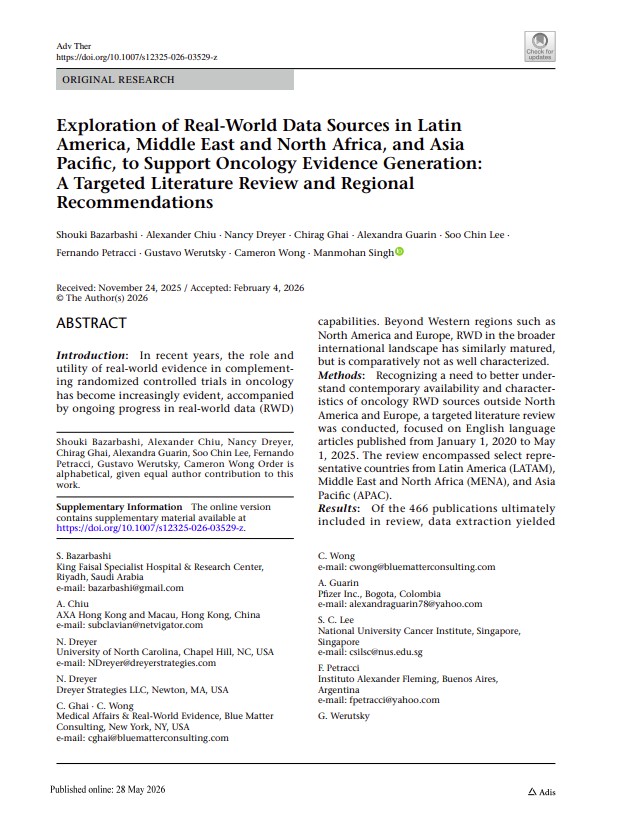
Many discussions reinforced the continuously-increasing role of RWE, from early development and trial design through regulatory engagement, payer decision-making, and post-launch evidence generation. China emerged as a major geographic focus, as its research infrastructure and biopharmaceutical ecosystem continue to expand. Several speakers noted that China-generated clinical data is becoming more broadly incorporated into global development programs when aligned with international standards. At the same time, many acknowledged that China-generated RWE still faces limitations in broader ex-China payer and HTA settings because of differences in governance, coding standards, care pathways, and data comparability.
Patient-Centered Value Assessment Gains Greater Operational Focus
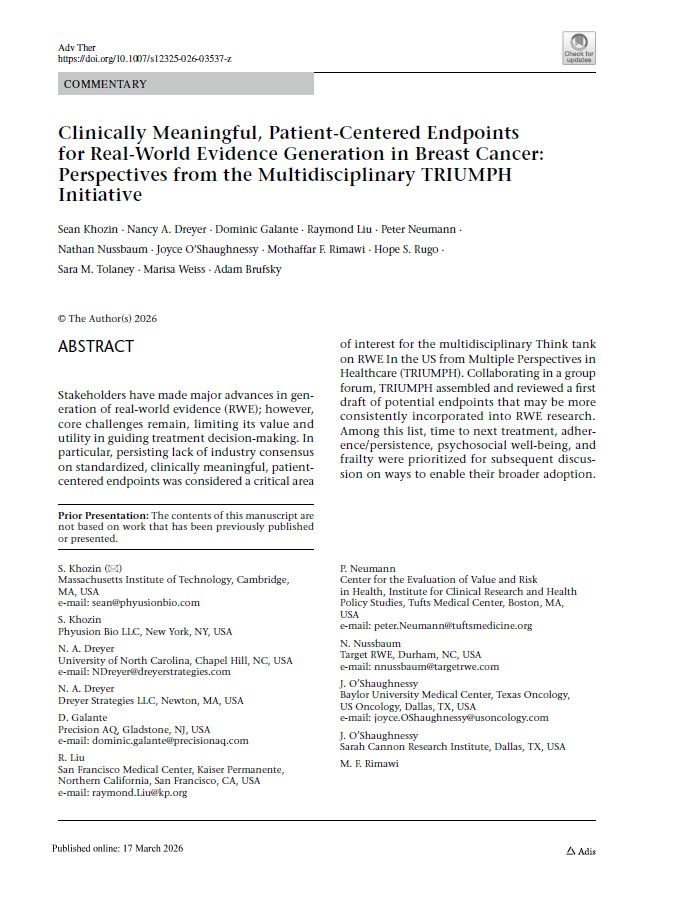
Patient-centered methodologies remained highly visible throughout ISPOR 2026, though discussions focused increasingly on implementation rather than broad conceptual advocacy. Sessions explored how data on patient experience, caregiver burden, patient preferences, and societal value elements can be more directly incorporated into clinical development, economic evaluation, and HTA decision-making. Several discussions also highlighted efforts to improve patient-reported outcomes (PROs) and clinical trial endpoints, particularly in oncology and rare disease settings where traditional endpoints may not fully capture patient experience.
Regional Variation in HTA and Access Requirements Continues to Increase
Many sessions focused on how evidence expectations and value-assessment frameworks are evolving differently across global markets. In Latin America, discussions highlighted efforts to increase patient involvement and transparency while balancing governance limitations and resource constraints. Other sessions explored how manufacturers are increasingly required to navigate differing evidence and access expectations across the US, Europe, Asia-Pacific, and emerging markets simultaneously. Speakers repeatedly emphasized that evidence strategies may need to become more regionally tailored while still supporting broader global development objectives.
Evolving Pricing and Policy Dynamics Continue to Shape Market Access Strategy
Pricing reform remained a major topic throughout the conference. Sessions explored the Inflation Reduction Act (IRA), Most Favored Nation (MFN) pricing proposals, Centers for Medicare & Medicaid Services (CMS) negotiations, international reference pricing, and broader affordability pressures. Discussions focused on how evolving policy reforms may influence launch sequencing, evidence-generation priorities, and global market-access strategies moving forward. Many stakeholders noted that pricing, access, and evidence generation are becoming increasingly interconnected as policymakers place greater scrutiny on both the cost and demonstrated value of innovative therapies.
Overall, ISPOR 2026 reflected how quickly the HEOR landscape continues to evolve. AI-enabled workflows, more sophisticated RWE strategies, patient-centered evidence generation, and growing policy complexity are all influencing how healthcare stakeholders evaluate innovation and make evidence-based decisions.
As these trends continue to develop, biopharma organizations will need evidence-generation strategies that remain adaptable, globally informed, and aligned with the evolving expectations of regulators, payers, providers, and patients.